
One and a Half Years of the E-Rechnungspflicht: Only One in Ten Invoices Reaching the Self-Employed Is a Genuine E-Invoice
Since January 2025, every business in Germany must be able to receive e-invoices. Our analysis of more than 10,000 incoming invoices shows: the share of genuine e-invoices has grown tenfold — to just one invoice in ten. Edition 1 of the monthly E-Invoicing Monitor.
- Category
- Business
- Updated
- Author
- Norman
Data basis: more than 10,000 anonymized incoming invoices, January 2024 – April 2026
Methodology & data basisPress inquiries: press@norman.finance
Since January 1, 2025, every business in Germany must be able to receive e-invoices — from large corporations down to one-person operations. One and a half years in, it is possible to measure what has actually arrived. This monitor is based on more than 10,000 incoming invoices that thousands of self-employed people and small businesses processed in Norman between January 2024 and April 2026.
One clarification up front, because this is where most misunderstandings start: a genuine e-invoice is exclusively a structured, machine-readable format under the EN 16931 standard. In practice that means XRechnung (pure XML) or ZUGFeRD (a PDF with embedded XML). An ordinary PDF has not legally counted as an e-invoice since 2025. Our processing pipeline detects and parses these formats automatically on every incoming document. We do not estimate — we count.
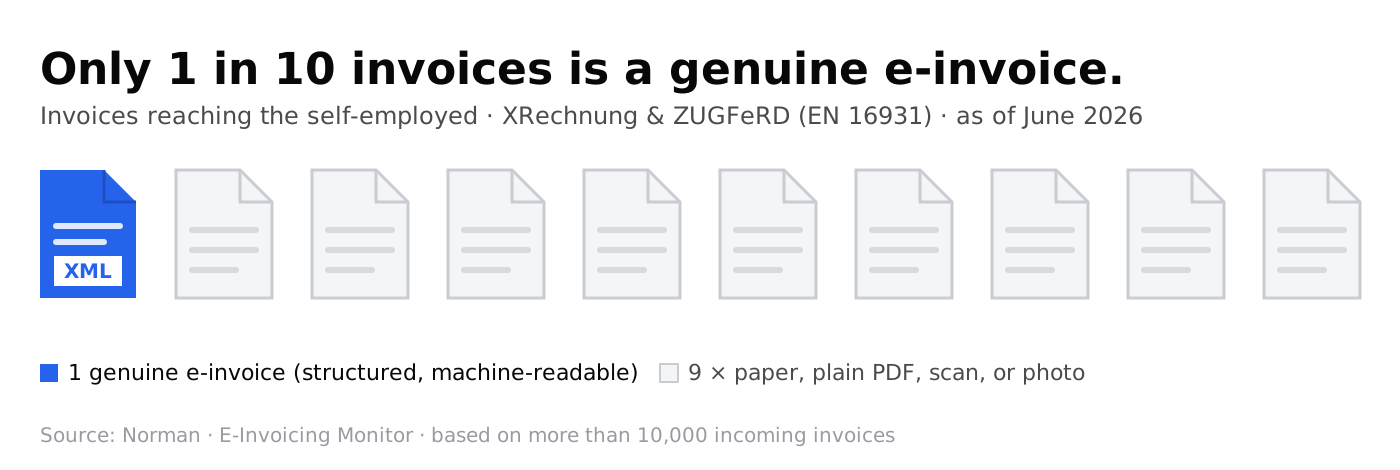
The result in one sentence: only about one in ten invoices reaching the self-employed is a genuine e-invoice.
The trend: tenfold — and still early days
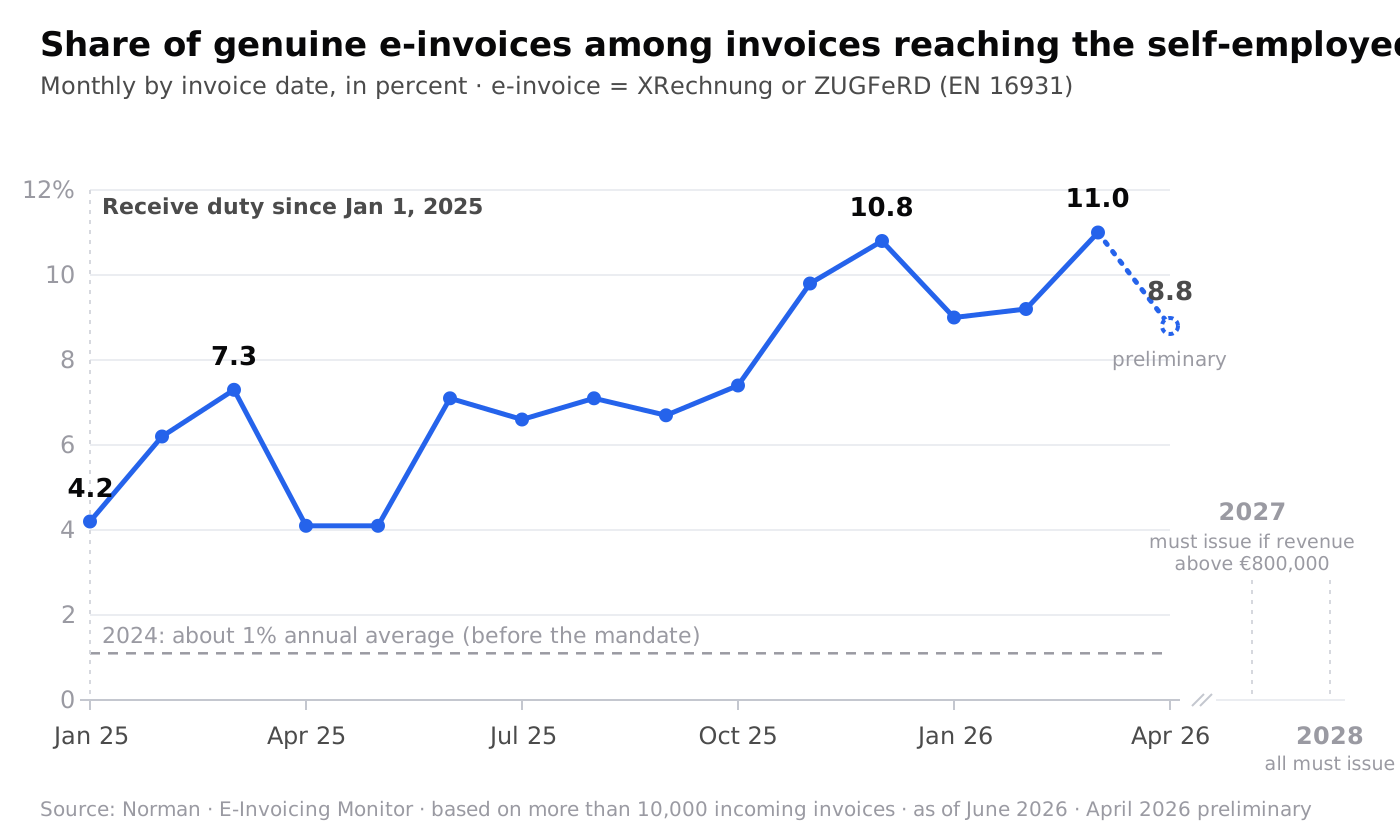
In 2024, the year before the mandate, the share stood at about 1 percent (1.1% annual average). With the deadline it jumped to 4.2% in January 2025. Across 2025 it reached 7.3%, and in December 2025 it hit double digits for the first time at 10.8%. The high-water mark so far is March 2026 at 11.0%; in the first quarter of 2026 the share averaged 9.8%. The April figure of 8.8% is preliminary: recent months are routinely revised upward as documents arrive late.
 Download CSV
A tenfold increase in just over two years sounds dynamic. But the base was close to zero. In absolute terms the share grows by three to four percentage points per year — a leisurely pace for a transition meant to be complete by 2028.
Broad, but thin
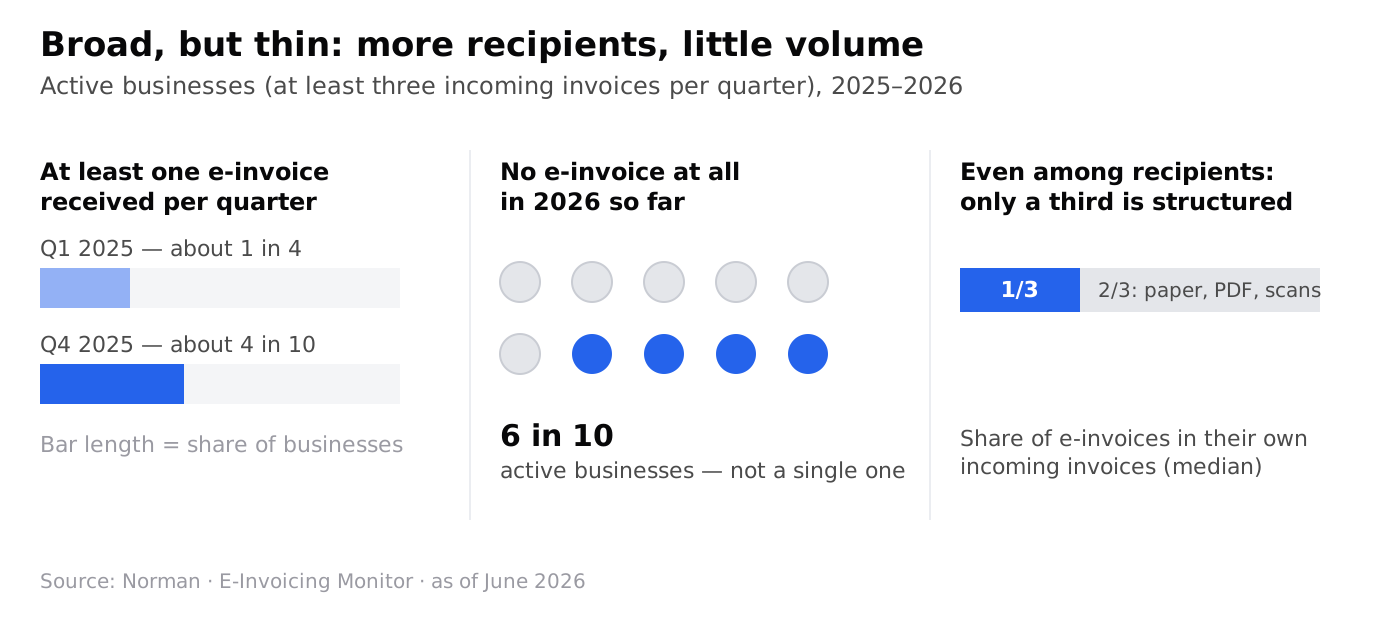
Behind the average sits a clear pattern: e-invoicing is spreading, but it dominates nowhere. In early 2025, about one in four active businesses — at least three incoming invoices per quarter — received at least one e-invoice in a quarter. By the end of 2025 it was about four in ten.
At the same time: six in ten active businesses have not received a single e-invoice in 2026 so far. And even where e-invoices do arrive, they remain a minority — at the median, only about a third of those businesses' incoming invoices are structured.
The transition law's punchline
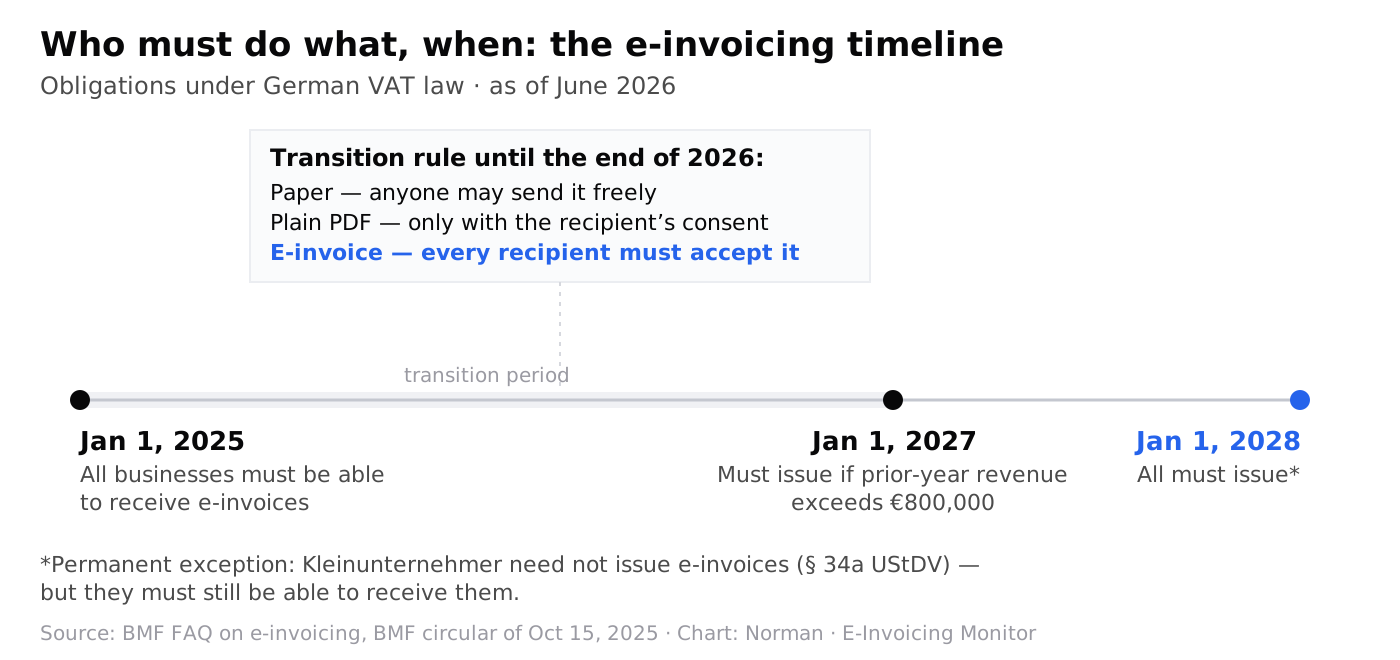
Until the end of 2026, a remarkable asymmetry applies. Any business may freely send a paper invoice. An ordinary PDF, however, requires the recipient's consent. And the e-invoice must be accepted by every recipient. The transition rules treat paper more generously than email with a PDF attached — while making the structured format the only one nobody is allowed to refuse.
The road ahead: from January 1, 2027, businesses with prior-year revenue above €800,000 must issue e-invoices. From January 1, 2028, the duty applies to everyone. One exception is permanent: Kleinunternehmer do not have to issue e-invoices (§ 34a UStDV) — but they must still be able to receive them.
Why we track this monthly
Extend the current pace of three to four percentage points per year, and the universal issuing mandate of January 2028 will arrive in a market where roughly four in five invoices still are not e-invoices. That is a projection, not a forecast — deadlines can trigger jumps, as January 2025 showed. Which is exactly why the monthly view matters: whether the 2027 issuing duty for high-revenue businesses bends the curve will show up here first.
This monitor is updated monthly at this address; the changelog at the bottom of the page documents every revision. All analyses in this section: Data & Research.
Methodology
The basis is more than 30,000 anonymized documents that self-employed people and small businesses in Germany processed in Norman between January 2024 and April 2026, including more than 10,000 incoming invoices for the main time series. Only a structured format under EN 16931 (XRechnung, ZUGFeRD) counts as an e-invoice — our processing pipeline detects and parses it on intake; ordinary PDFs, scans, and photos do not count. The time series follows the invoice date, not the upload date; the most recent two months are preliminary. Internal and test accounts are excluded. All figures are aggregates; no published statistic is based on fewer than 40 businesses. We do not publish exact monthly volumes. Our user base is more digitally inclined than average — the true e-invoice share is likely lower.
Legal sources: the German Federal Ministry of Finance's FAQ on e-invoicing, § 34a UStDV, and the BMF circular of October 15, 2025. How we handle data in general is documented in Methodology & data basis.
About this data
Norman is an accounting platform for self-employed people and small businesses in Germany; the anonymized documents analyzed here originate there. Charts and figures from this page may be reused freely with attribution to "Norman". Press inquiries and data requests: press@norman.finance.
Changelog
- June 2026: First edition. Time series January 2024 to April 2026; April 2026 preliminary.
Norman handles the operational finance work behind the scenes
From invoicing to bookkeeping, Norman keeps recurring finance work organized so you can stay on top of deadlines with less manual effort.