
The Hausbank of the Self-Employed Is No Longer a Sparkasse — It Is N26
We analyzed more than 1,000 bank connections that German freelancers linked to their accounting. Two in three lead to a neobank, N26 is the runaway leader, and all Sparkassen combined reach only about one in ten. Edition 1 of the Banking Monitor.
- Category
- Company news
- Updated
- Author
- Norman
Data basis: more than 1,000 bank connections of self-employed users, as of June 2026
Methodology & data basisPress inquiries: press@norman.finance
Which bank does a self-employed person in Germany use when they start today? The obvious answer would be the Sparkasse around the corner — the country's densest branch network, for decades the Hausbank of Germany. The data paints a different picture. This analysis is based on more than 1,000 bank connections that self-employed people and small businesses in Germany linked to their accounting in Norman (as of June 2026).
A connected bank is a strong signal. What gets linked is the account that runs the day-to-day business — income, expenses, receipts. So the numbers do not show where someone once opened an account, but which account actually works.
Two in three connections lead to a neobank
The picture is clear. About two in three bank connections lead to a neobank or fintech — roughly 66 percent. Traditional big and Direktbanken together reach about 15 percent, Sparkassen and cooperative banks about 10 percent, and the rest is spread across other institutions (about 9 percent).
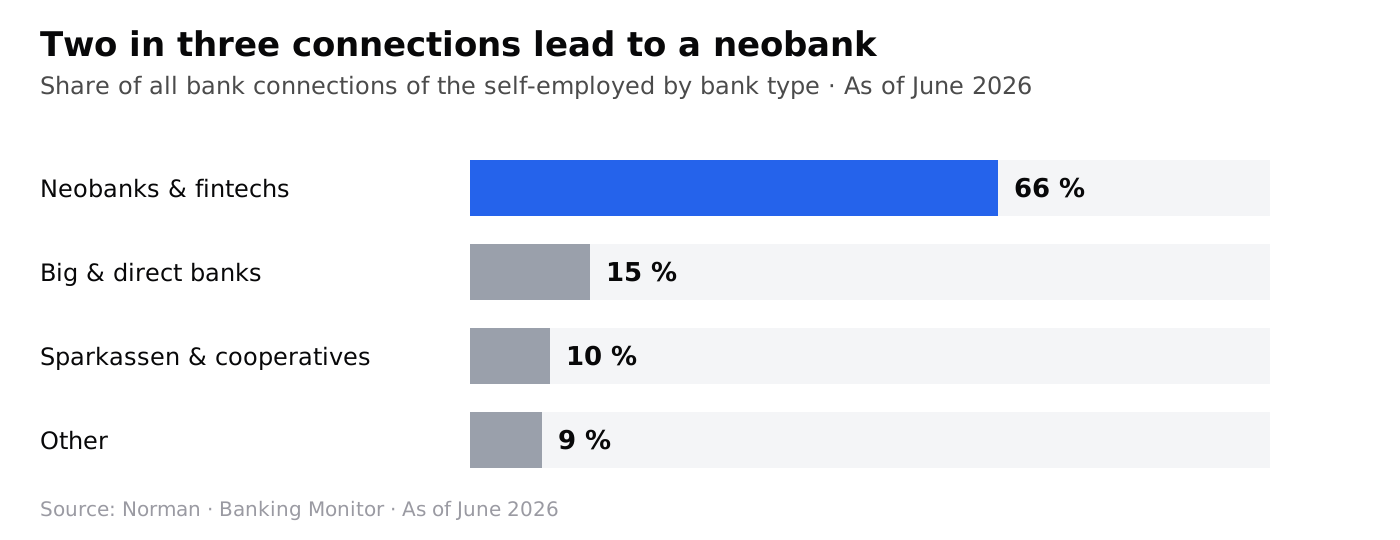
The stability is notable. Among newly linked accounts, the neobank share was about two thirds in 2024, 2025, and 2026 alike. This is not a one-year spike but a settled state.
N26 leads by a wide margin
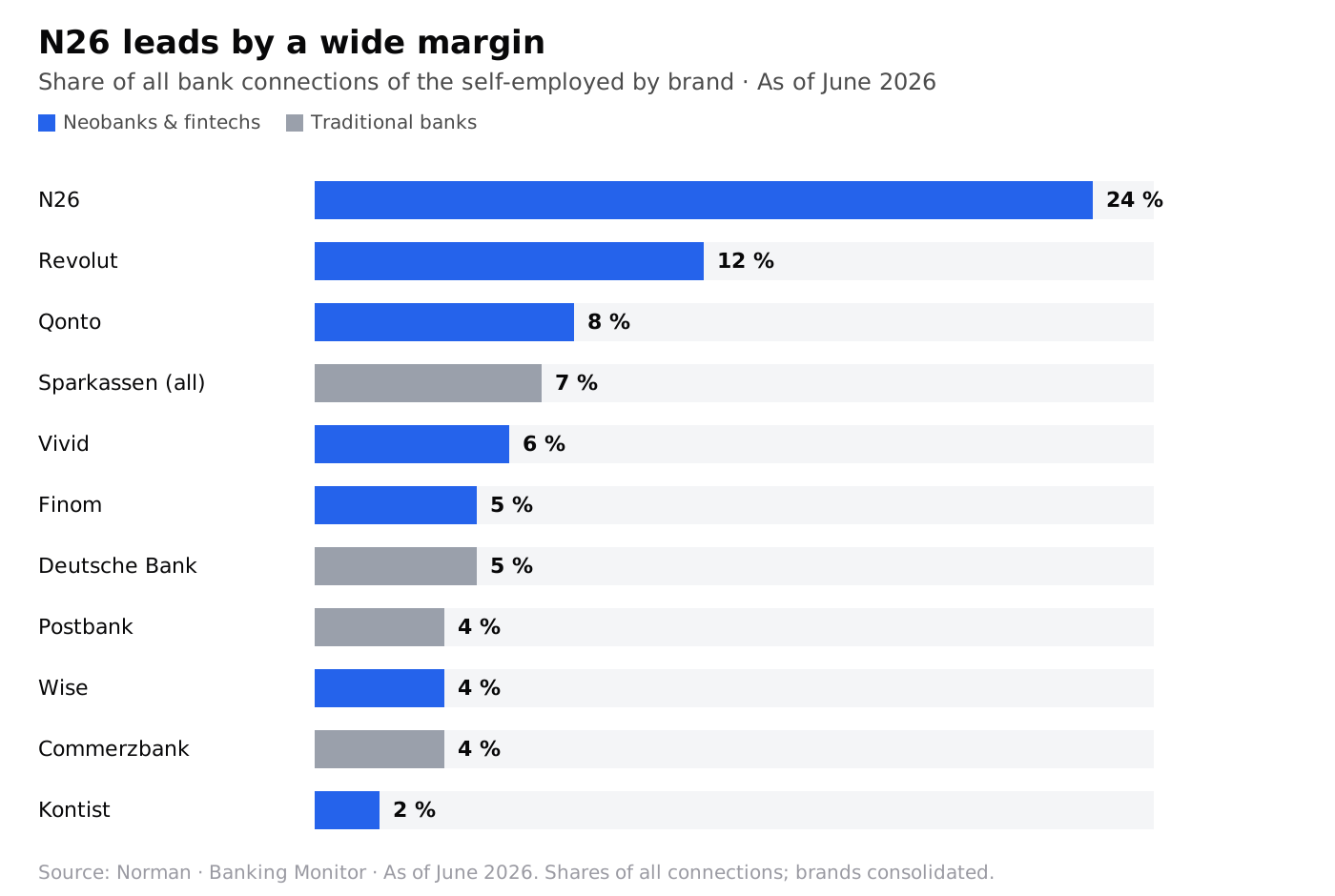
Within the neobanks there is a clear front-runner. N26, with about a quarter of all connections, is by far the most frequently linked bank — roughly 1.8 times as many as the runner-up Revolut, which reaches about 12 percent. Qonto follows with about 8 percent, and only then come the Sparkassen as the first traditional banking group.
 Download CSV
The ranking reads like a who's who of the European fintech scene: after Revolut and Qonto come Vivid, Finom, Wise, and Kontist. The traditional names — Deutsche Bank, Postbank, Commerzbank — appear only far down the list, each in the low single digits. N26 alone connects about three times as many self-employed users as all Sparkassen combined.
The big blank: the Sparkasse
This is the real finding. In Germany's retail banking market, Sparkassen and cooperative banks are the backbone. Together they hold about half of all private Girokonten — the Sparkassen, depending on the count, around 35 to 45 percent, the Volks- und Raiffeisenbanken about 13 percent. Among the self-employed analyzed here, both groups together reach about 10 percent.
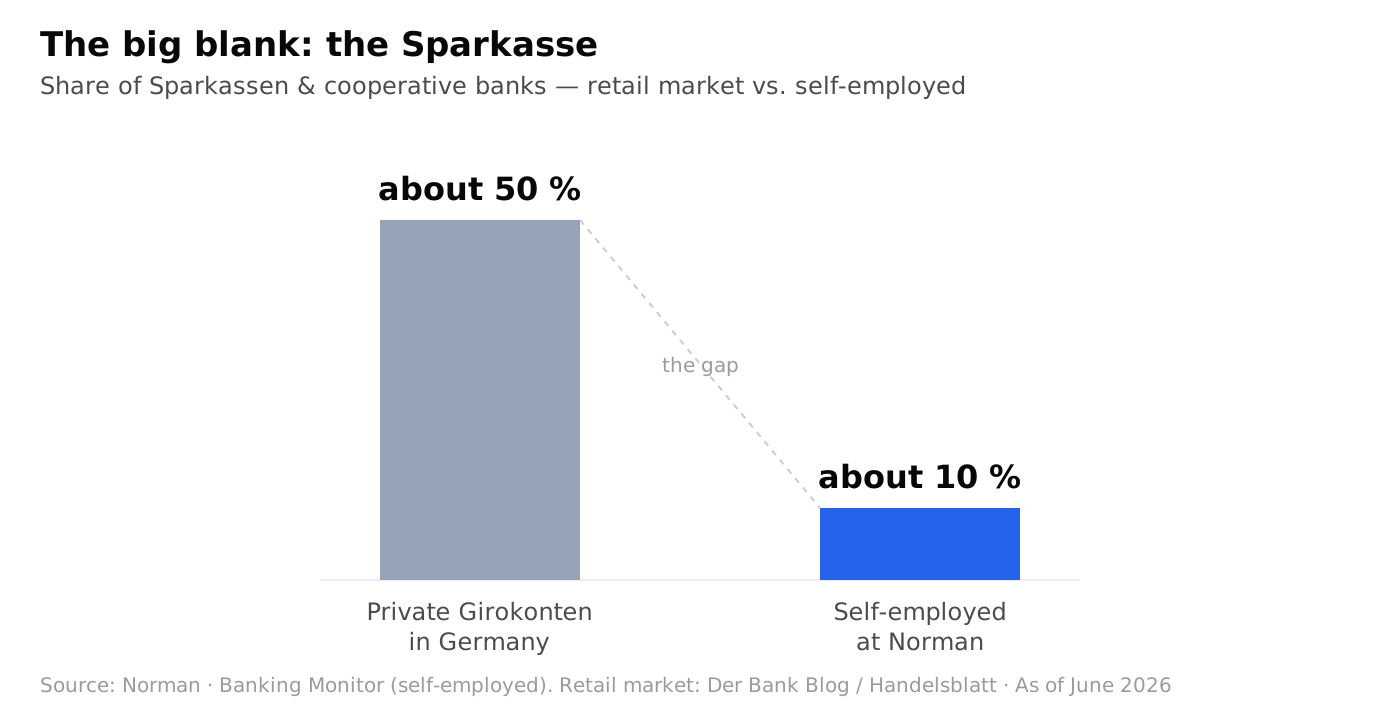
About half turns into about one in ten. The banking group that defines Germany's retail market plays almost no role in the operating day-to-day of these self-employed people.
Why this is — and what it means
One reason lies in the nature of the data, and we name it openly: anyone who keeps their books digitally and links the account via an interface belongs to the digitally working half of the self-employed. That is exactly where neobanks are strong — they offer the fastest account opening, the best app, and the most open interfaces. The actual Sparkassen share across all self-employed people is therefore likely higher than about 10 percent.
But this is precisely the group that matters. These are the digital workers, the early deciders — and they have decided. For them, the Hausbank is no longer a question of the branch, but of the interface. If the next generation of self-employed people banks like this, the distribution describes not a niche but a vanguard. For the established institutions it is a wake-up call; for the neobanks, a confirmation.
We update this analysis quarterly at this address from now on; the changelog at the bottom of the page documents every revision. All analyses in this section: Data & Research.
Methodology
This is based on more than 1,000 bank connections that self-employed people and small businesses in Germany linked to their accounting in Norman (as of June 2026). Multiple connections to the same bank are consolidated; different legal entities of the same brand (e.g. several Revolut or Postbank entities) are merged into one brand. Only Norman core users are analyzed; connections from white-label partnerships are excluded. "Neobanks & fintechs" includes, among others, N26, Revolut, Qonto, Finom, Vivid, Wise, Kontist, bunq, and C24; Direktbanken such as DKB and ING count as traditional banks. A business can connect several banks; shares refer to all connections. Internal and test accounts are excluded. All values are shares; no published figure is based on fewer than 40 businesses. We do not publish absolute user counts. The sample reflects digitally working self-employed people and tends to overstate neobanks, since these offer the best interfaces.
Retail-market shares per Der Bank Blog and Handelsblatt. How we work with data in general is documented in Methodology & data basis.
About this data
Norman is an accounting platform for self-employed people and small businesses in Germany; the anonymized bank connections analyzed here originate there. Charts and figures from this page may be reused freely with attribution to "Norman". Press inquiries and data requests: press@norman.finance.
Changelog
- June 2026: First edition. Shares by bank type and brand; as of June 2026.
Norman handles the operational finance work behind the scenes
From invoicing to bookkeeping, Norman keeps recurring finance work organized so you can stay on top of deadlines with less manual effort.